Flat roof repair
Repairs for felt, rubber and fibreglass roofs on bays, porches, kitchen additions, dormers and garages.
Flat roof repair in ThetfordIf water is getting in near Castle Hill, felt is peeling on a rear extension off London Road, or ridge tiles have shifted on a later estate house near the forest edge, ask for free quotes from roofers covering Thetford.
★★★★★ Free quotes · No obligation · Takes under a minute
Thetford roofs take a different kind of wear from a coastal town. The mix here is sandy Breckland ground, long dry spells, sharp showers, pine needles from the forest belt and a housing stock that runs from old flint and brick streets to post-war estates. Homeowners often begin with roof leak tracing, flat roof repair or tile and slate repair once the weak section becomes clear.
Repairs for felt, rubber and fibreglass roofs on bays, porches, kitchen additions, dormers and garages.
Flat roof repair in ThetfordTracing water through tiles, valleys, chimney flashings, gutters and lower roof junctions.
Leaking roof repair in ThetfordHelp after sudden leaks, slipped ridges, storm damage or a roof fault that is active indoors.
Emergency roof repair in ThetfordFixing cracked tiles, slipped slates, worn verges, ridge bedding and valley details.
Tile and slate roof repairGarage roof repairs before soft decking, damp storage and sagging felt turn into a bigger job.
Garage roof repair in ThetfordStopping drips around box gutters, roof bars, wall flashings and joints above glazed rooms.
Conservatory roof repairThetford sits where the River Thet meets the Little Ouse on the Norfolk and Suffolk border, with Thetford Forest pressing in from the south and west and open Breckland ground around the town. That setting means roofs get dry, dusty spells followed by hard rain and gusts that can find an old weak point quickly. Moss is often less of a problem than in wetter places, but dry movement, debris from nearby trees and sudden downpours can expose tired flashings and lower roof coverings.
The housing stock changes sharply across the town. Around the older centre, Castle Hill, White Hart Street, King Street and the roads near Nuns Bridges there are flint, brick and pantiled buildings, older terraces and chimneyed roofs with valleys and parapets. Move out towards Bury Road, London Road and the post-war estates and the picture becomes semis, bungalows and later houses with concrete tiles, rear additions, porches and garage roofs that often fail before the main slope does.
Thetford also has many roofs close to tall pines and broad roadside trees. Gutters can choke with needles, shallow outlets on flat roofs can hold water, and lower sections behind parapets or side walls can stay hidden until a bedroom ceiling marks up indoors. A useful quote request in Thetford usually says which part of the property is involved, not only which room is wet.
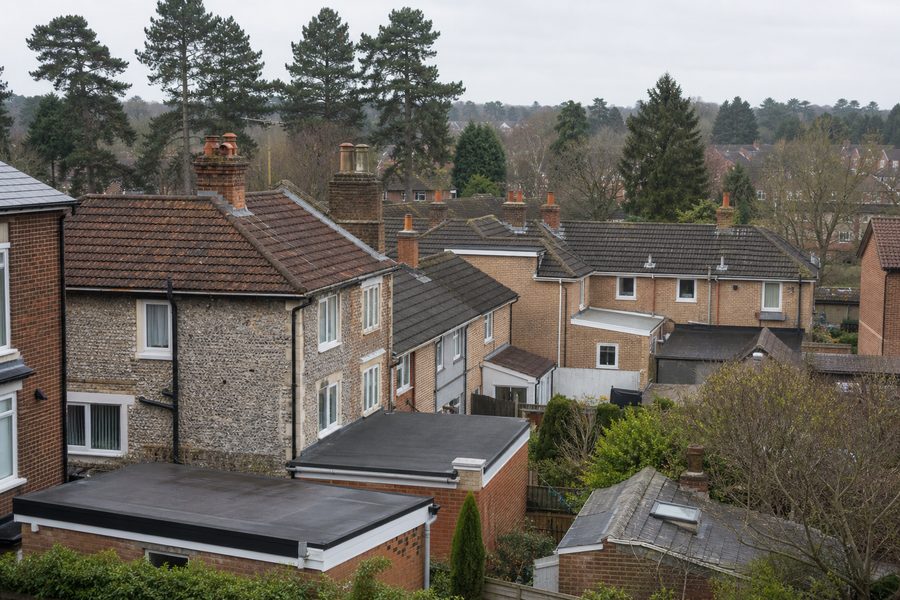
These are the jobs that keep turning up once older roof details, tree debris and sudden East Anglian weather start opening gaps.
Thetford is not a place where one roof pattern fits every street. The town sits between the River Thet and the Little Ouse, with the Brecks stretching out around it and the forest belt close by. That brings a roof repair pattern shaped less by salt and more by movement, debris, quick temperature swings and sharp bursts of rain. A roof can sit through a dry spell with no obvious issue, then give up during the first heavy shower because the crack, lifted edge or open joint was already there waiting.
The dry Breckland setting matters. Roof coverings bake hard in summer, then cool fast after rain. Mortar on ridges and verges, old flashings and ageing felt can all start separating in that cycle. On homes near taller trees, another issue builds quietly: pine needles and leaves gather in valleys, gutters and flat roof outlets until a routine storm turns a drainage fault into an internal leak.
One of the reasons Thetford needs more precise roof descriptions is the mix of housing types. The older streets near the town centre, riverside and Castle Hill bring pitched roofs with chimneys, valleys, parapets and older brick or flint walls. Water can travel across those details for some distance before it shows on a ceiling, so the stain inside may not sit directly below the first route in. A damp patch beside a chimney breast or along an upper wall often needs careful tracing.
Further out, many homes were built or expanded in the post-war decades, including properties with interlocking concrete tiles, front porches, rear kitchen additions, attached garages and dormers. Those lower sections often become the real source of trouble. A homeowner may suspect the main roof when the actual problem sits on the extension roof behind it, at a flashing against the wall or along a garage edge trim that has lifted and started letting water under the felt.
Thetford Forest is part of daily life around the town, and roofs close to that belt often need a bit more attention to drainage. Pine needles do not always look dramatic from the ground, yet they can mat together in gutters and outlet sums, hold moisture at a joint and slow water down enough for it to back up under tiles or coverings. That is one reason some Thetford quote requests describe leaks after heavy rain only, while others note overflow and staining around fascias before any water reaches a room.
Tree cover also affects garages, porches and other low roofs. Those sections are easy to ignore because they do not always sit above the main living space. By the time a homeowner asks for prices, the deck under the felt may already be soft or the trim may be visibly distorted. A focused repair to that lower roof is often the answer, not a broader reroof of the whole house.
Thetford's older homes can hide water well. Chimney flashings, valleys, parapet gutters and party wall junctions all give leaks a chance to travel before they appear indoors. On pantiled or mixed repaired roofs, one slipped tile or one split lead joint can create a stain several feet away from the true source. That is why clear fault descriptions matter so much. Saying the mark is beside the chimney, over the front bedroom or at the rear where the extension meets the house is far more useful than saying only that the roof is leaking.
Some properties around Nuns Bridges, Bury Road and London Road also have a history of small alterations over time, from porch roofs to rear additions and replacement gutters. Each change creates another junction, and it is often that junction rather than the main field of tiles that starts failing first.
Flat roof repairs are a steady part of the workload in Thetford. Bay tops, side passages, dormers, utility room roofs, garages and later kitchen additions are common across the town, especially on houses that have been altered over the years. A flat roof can hold water after needle build-up, crack along an old patch line or open at the edge where heat and cold have worked at the trim. In many cases the repair is local to that roof section and can be priced as such.
Garage roofs deserve a mention of their own. They are often the part people postpone because the leak is not immediately over a bedroom. Yet once the deck softens and stored items go damp, the job tends to grow. Thetford's dry spells can also hide the pace of the damage because the roof appears quiet for weeks until the next heavy rain tests it again.
A sudden roof problem in Thetford might be a slipped ridge after gusty weather, a valley that has blocked and overflowed, a piece of flashing that has opened beside a chimney or a flat roof seam that has given way in a storm. None of those faults has to look huge from outside to cause real water ingress inside. Once insulation, plasterboard or stored belongings start getting wet, the cost can rise quickly.
If the leak is active now, it helps to say so in the request and note if you can see any movement from ground level. The emergency roof repair page sets out the sort of details roofers need first.
The most useful requests usually mention the property type, the roof section involved and the weather pattern that triggers the issue. In Thetford that may mean saying the leak appears after intense rain, the garage roof backs onto trees, the stain is near a chimney on an older road, or the problem sits where a rear extension joins the house. Those clues help roofers decide if the likely fault is on the main slope, at a junction, in the drainage route or on a separate lower roof.
That level of detail does not lock anyone into the repair, but it does help the first response come back closer to the mark. On a town with Thetford's mix of historic roofs, post-war estates and forest-edge maintenance issues, that saves time for everyone.
Describe the Thetford roof problem clearly, including the roof section involved and if heavy rain, blocked gutters or nearby trees seem to trigger it.
Roofers covering Thetford can reply with prices and a likely repair route for the roof section you have described.
Compare the quotes and move ahead only when the diagnosis fits the fault you have seen at the property.
The nearby pages below cover separate towns and villages around the wider Breckland and border area where homeowners often search using their own place name.
Yes. Rear additions, porches, dormers and garages are common sources of leaks, especially where outlets block or trims lift.
Yes. Pine needles and leaves can hold water in gutters, valleys and flat roof outlets until heavy rain backs up into the roof detail.
Often they are. Chimneys, valleys and parapet details can let water travel before it appears indoors.
Yes. Saying front slope, rear extension, bay, garage or conservatory junction makes the first response far more useful.
Yes. A garage roof is usually priced as a separate repair and does not mean the whole house roof needs work.
Send one free request with the roof section, property type and symptoms, then compare prices from roofers covering Thetford.
Get a Quote